
How the natural gas market works
Natural gas is used by residential, small business, and farm consumers for space heating. It is also used for:
- Power generation to produce electricity
- Feedstock to create petrochemical products
- Steam creation to enhance heavy oil production
- Fuel in fleet vehicles
- Energy supply to other markets beyond the province including Eastern Canada and the United States
Supply and demand
Alberta's gas prices are determined by supply and demand and are influenced by market conditions and prices throughout Alberta and North America. Some factors affecting natural gas prices include:
- Weather conditions
- Storage inventory levels
- Gas drilling levels and production
- Natural gas imports (from the United States)
- Economic conditions
The natural gas industry’s four key sectors
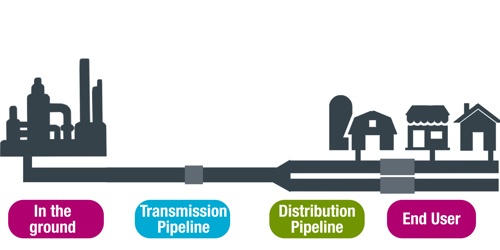
Production
Energy exploration companies tap into gas reservoirs and if natural gas is found in commercial quantities, well equipment and gathering lines are installed to produce gas. These facilities measure the gas and remove water and other impurities.
Processing plants, located near the field or further downstream, extract any valuable liquids associated with natural gas. These natural gas liquids include propane, butane, ethane and other condensates. The gas flows through underground gathering pipelines that transport it to a transmission pipeline.
Transmission
High-pressure, high-capacity transmission pipelines act as "toll highways" to transport natural gas from the processing plant to major markets. In Alberta, most of the gas produced flows into the NOVA Gas Transmission system (the Alberta portion of the TransCanada pipeline system) and ATCO Gas Pipeline. The Alliance Pipeline system also transports natural gas, along with natural gas liquids, from Northwest Alberta and British Columbia to the Chicago, United States market area.
Distribution
Low-pressure, local distribution pipeline systems connect to high-pressure gas transmission pipelines. From there, natural gas is transported to homes, businesses, and farms through natural gas delivery companies. The Alberta Utilities Commission (AUC) fully regulates distribution systems.
Two major investor-owned distribution companies service the majority of Albertans: ATCO Gas and AltaGas Utilities Inc. The remaining natural gas distributors are:
- Natural gas co-operatives, regulated by their elected board members
- Municipally owned utilities, regulated by their municipal councils
- County-owned and First Nations’ gas utilities
End user (retail)
Default retailers and competitive retailers set retail rates for residential, farm and small business consumers. Rates set by default retailers are reviewed and approved by the AUC.
Retailers charge non-energy rates to recover the costs of billing and providing customer service.
Choices for buying natural gas
Consumers may have options when buying natural gas. These fall into two basic categories: default retailers and competitive retailers.
Consumers can use the Cost Comparison Tool to find electricity options in their area.