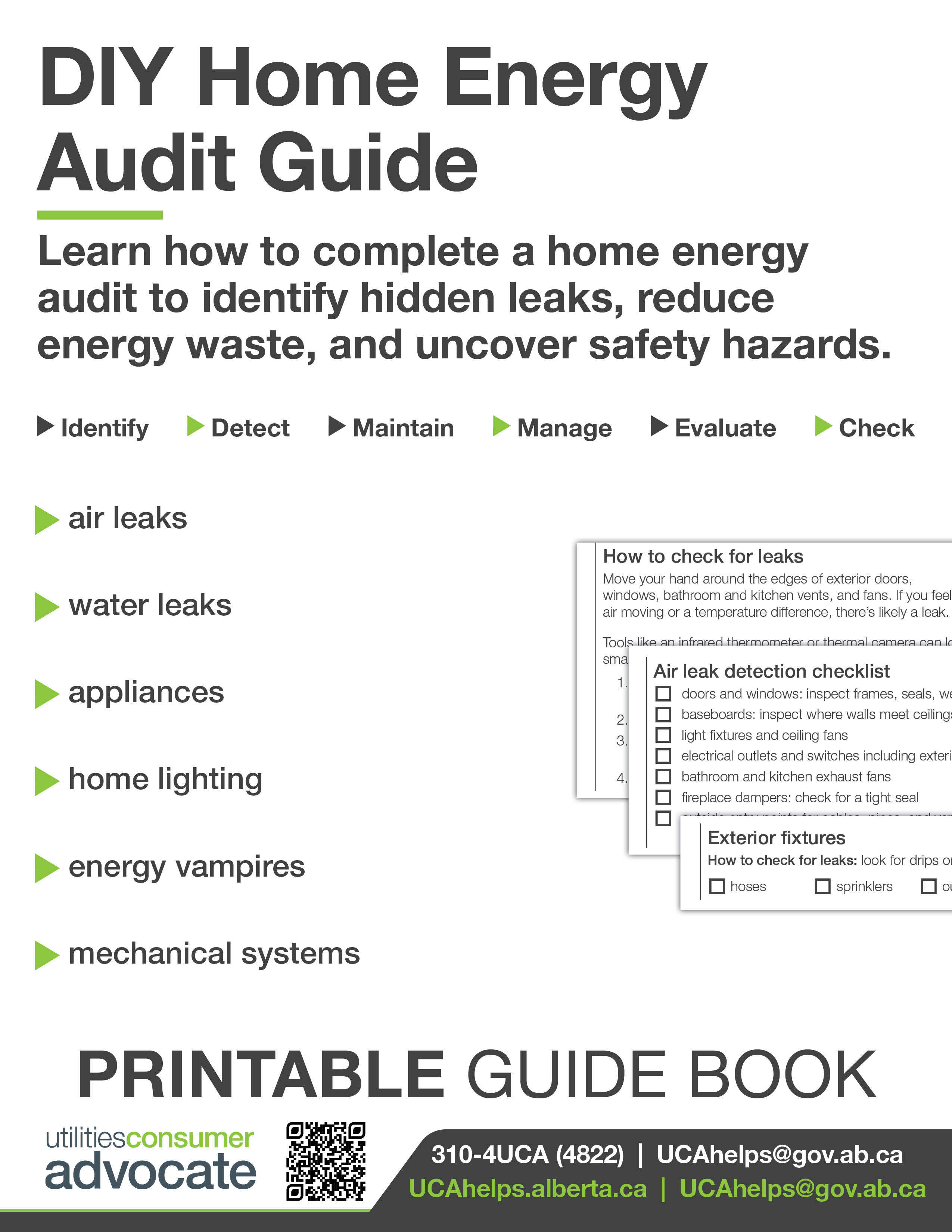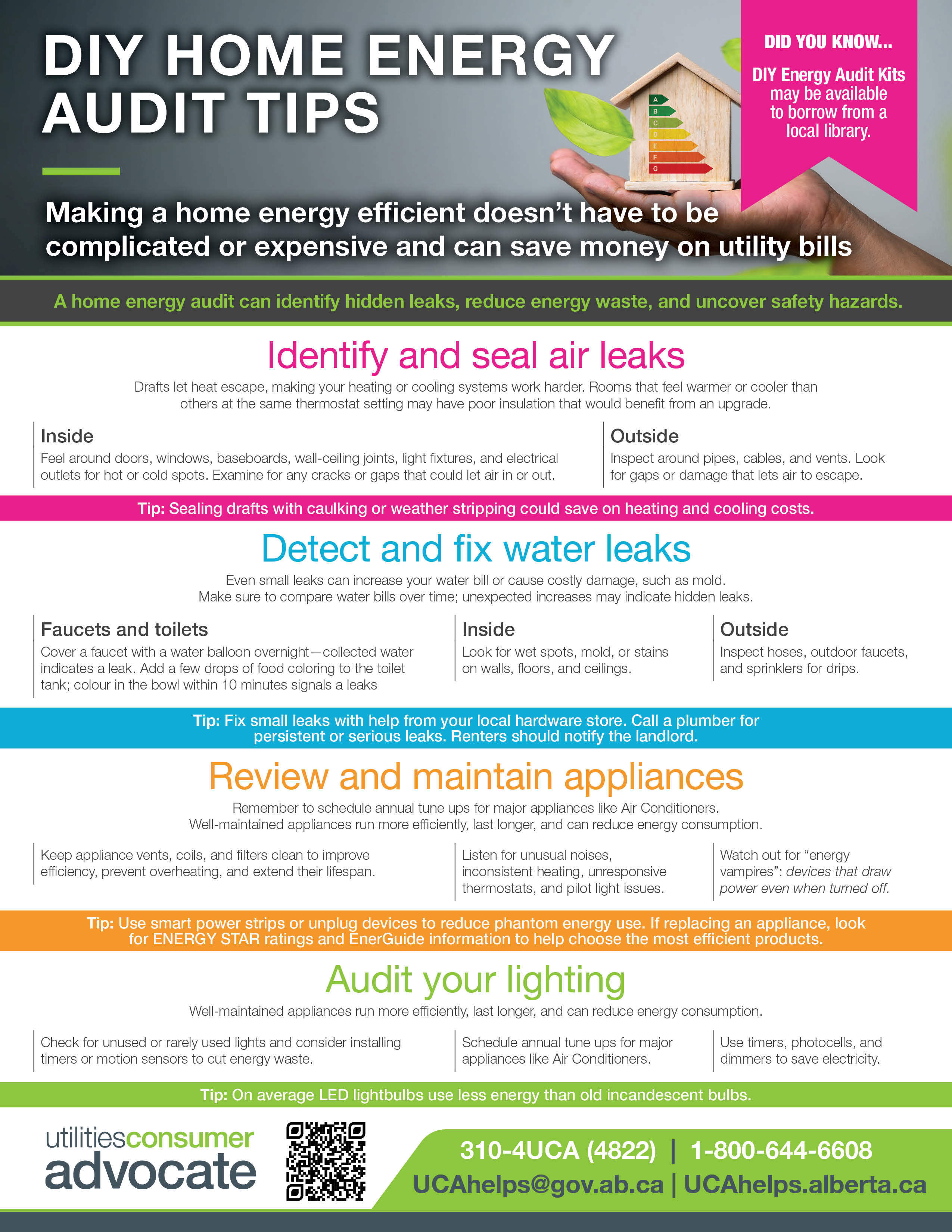
A home energy audit can help consumers improve their energy efficiency and save money on utility bills by identifying hidden leaks, reducing energy waste, and uncovering safety hazards.
Use the following steps to complete an audit and take notes on what’s found to help prioritize improvements.
Tip: DIY Energy Audit Kits may be available to borrow from a local library.
|
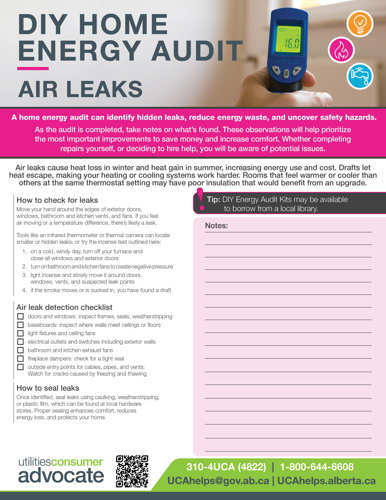
Air leaks cause heat loss in winter and heat gain in summer, increasing energy use and cost - about 25% of home heat loss comes from leaks around windows and doors. How to check for leaksConsumers can move their hand around the edges of exterior doors, windows, bathroom and kitchen vents, and fans. Feel air moving or a temperature difference? There’s likely a leak! Air leak detection checklist:- Doors and windows: inspect frames, seals, weatherstripping - Baseboards: inspect where walls meet ceilings or floors - Light fixtures and ceiling fans - Electrical outlets and switches including exterior walls - Bathroom and kitchen exhaust fans - Fireplace dampers: check for a tight seal - Outside entry points for cables, pipes, and vents: watch for cracks caused by freezing and thawing Tools like an infrared thermometer or thermal camera can locate smaller or hidden leaks, or try this incense test: - On a cold, windy day, turn off the furnace and close all windows and exterior doors - Turn on bathroom and kitchen fans to create negative pressure - Light incense and slowly move it around doors, windows, vents, and suspected leak points - If the smoke moves or is sucked in, there is a draft How to seal leaksOnce air leaks are identified, seal them using caulking, weatherstripping, or plastic film, which can be found at local hardware stores. Conduct a DIY home energy audit for air leaks
|
|
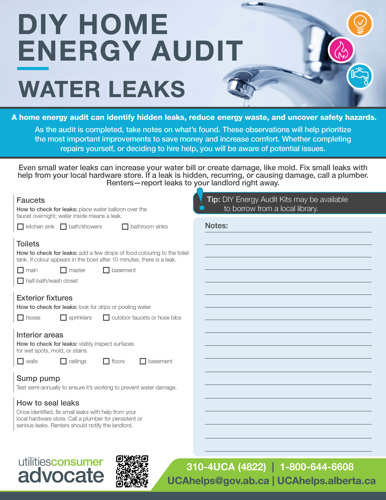
Even small water leaks can increase water bills or create damage, like mold. Consumers can fix small leaks with help from a local hardware store. If a leak is hidden, recurring, or causing damage, call a plumber. Renters—report leaks to the landlord right away. Water leak detection checklist:- Faucets: place water balloon over the faucet overnight; water inside means a leak - Toilets: add a few drops of food colouring to the toilet tank - if colour appears in the bowl after 10 minutes, there's a leak - Exterior fixtures: inspect hoses, outdoor faucets, and sprinklers for drips or pooling water - Interior areas: check for wet spots, mold, or stains on walls, floors, and ceilings - Sump pump: test semi-annually to ensure it’s working to prevent water damage Conduct a DIY home energy audit for water leaks
|
|
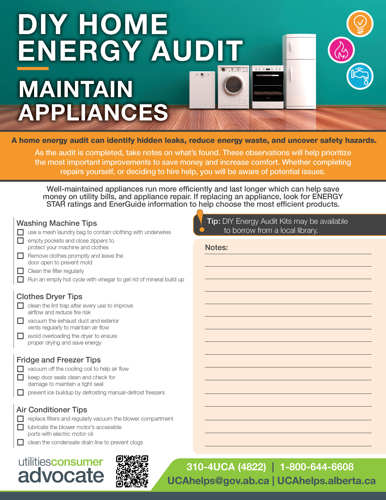
Well-maintained appliances run more efficiently and last longer, which can help save money on utility bills and appliance repair. If replacing an appliance, look for ENERGY STAR ratings and EnerGuide information to help choose the most efficient products. Washing machine tips:- Use a mesh laundry bag to contain clothing with underwires - Empty pockets and close zippers to protect your machine and clothes - Remove clothes promptly and leave the door open to prevent mold - Clean the filter regularly - Run an empty hot cycle with vinegar to get rid of mineral build up Clothes dryer tips:- Clean the lint trap after every use to improve airflow and reduce fire risk - Vacuum the exhaust duct and exterior vents regularly to maintain air flow - Avoid overloading the dryer to ensure proper air flow to save energy Fridge and freezer tips:- Vacuum off the cooling coil to help air flow - Keep door seals clean and check for damage to maintain a tight seal - Prevent ice buildup by defrosting manual-defrost freezers Air conditioner tips:- Replace filters and regularly vacuum the blower compartment - Lubricate the blower motor’s accessible ports with electric motor oil - Clean the condensate drain line to prevent clogs Conduct a DIY home energy audit to maintain appliances
|
|
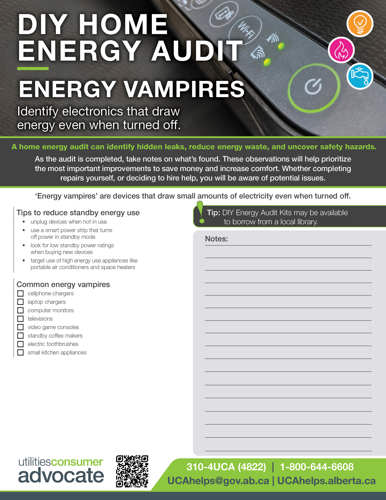
‘Energy vampires’ are devices that draw small amounts of electricity even when turned off like: - Cellphone and laptop chargers - TVs and video game consoles - Standby coffee makers - Electric toothbrushes - Small kitchen appliances Tips to reduce standby energy use:- Unplug devices when not in use - Use a smart power strip that turns off power in standby mode - Look for low standby power ratings when buying new devices - Reduce use of high energy appliances like portable air conditioners and heaters Conduct a DIY home energy audit for energy vampires
|
|
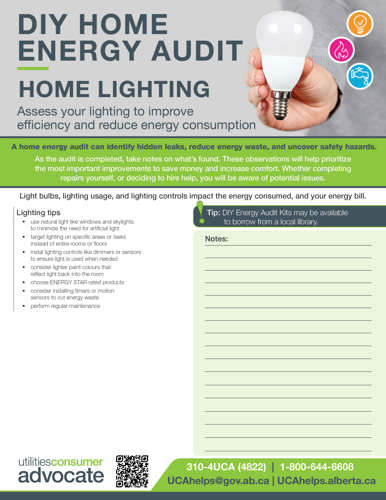
Light bulbs, lighting usage, and lighting controls impact the energy consumption and utility bills. Lighting tips:- Use natural light like windows and skylights to reduce the need for artificial light - Target lighting on specific areas or tasks instead of entire rooms or floors - Consider lighter paint colours that reflect light back into the room - Use mirrors to reflect light throughout the room - Choose ENERGY STAR rated products - Consider installing dimmers, timers or motion sensors to cut energy waste - Perform regular maintenance Conduct a DIY home energy audit for home lighting
|
|
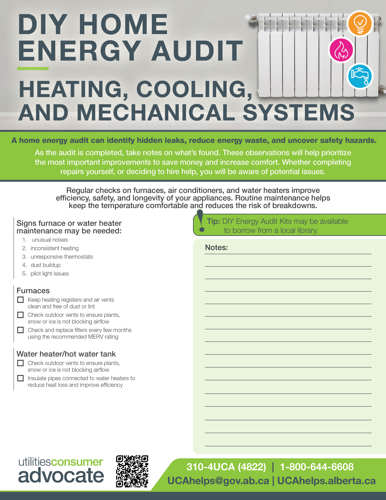
Regular checks on furnaces, air conditioners, and water heaters can improve efficiency, safety, and longevity of your appliances. Routine maintenance helps keep the temperature comfortable and reduces the risk of breakdowns. Signs furnace or water heater maintenance may be needed:- Inconsistent heating - Unusual noises - Unresponsive thermostats - Dust buildup - Pilot light issues Ways to keep up furnace and water heater maintenance:- Check outdoor vents and connections to ensure snow or ice is not blocking airflow - Keep heating registers, air vents, and baseboard heaters clean and free of dust or lint - Check and replace filters every few months using the recommended MERV rating - Insulate pipes connected to water heaters to reduce heat loss and improve efficiency Conduct a DIY home energy audit for heating, cooling, and mechanical systems
|
Check out available grants and programs for home energy efficiency.
Use the UCA's DIY home energy audit guide