
Micro-generation is small-scale local electricity production, which uses renewable and alternative energy sources. Solar power, or Solar Photovoltaic (PV), is one of the most common types of micro-generation in Alberta. Consumers can use the power generated to offset a portion of their own electricity consumption.
Micro-generator types
Under the provincial Micro-generation Regulation, there are two types of micro-generators: small-scale (under 150 kilowatts) and large-scale (between 150 kilowatts and 5 megawatts).
Most residential, farm, or small business micro-generators are small-scale micro-generators.
Becoming a micro-generator
By generating electricity through solar power, consumers can:
- Reduce their carbon footprint and energy charges on electricity bills
- Get a credit from their electricity retailer for every kilowatt-hour (kWh) generated and not used
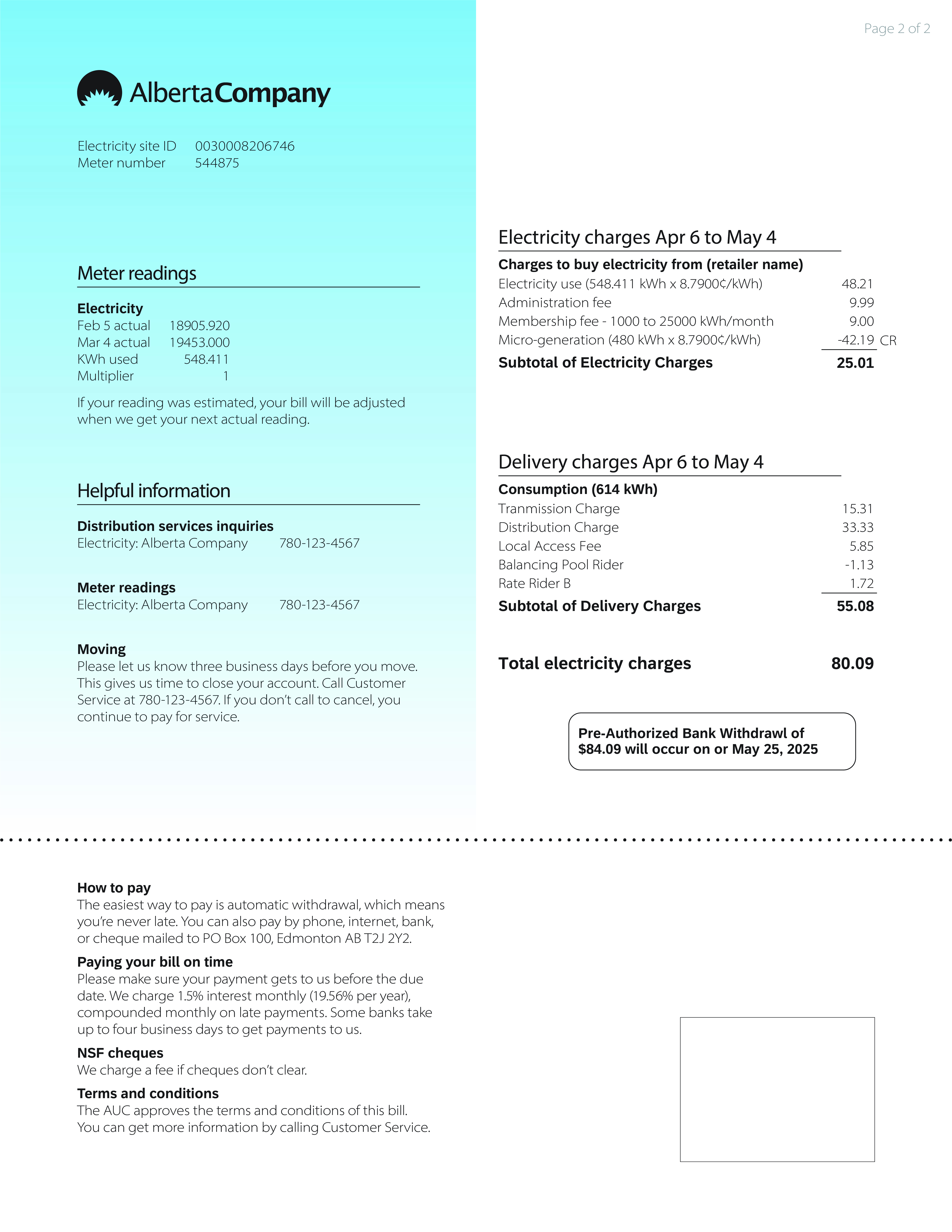
However, the cost of delivering energy is largely fixed, and consumers cannot reduce it by generating their own electricity. Therefore, consumers will still have to pay fees like distribution charges, transmission charges, local access fees, delivery charges, and balancing pool allocation on their bill.
Consumers will also pay their agreed upon rate if they do not produce enough energy from their micro-generating system and still have to take power from the grid.
It's important for consumers to know how micro-generation will affect their bill. Before purchasing and installing solar panels, consumers ca confirm how and when credits will be paid out with their retailer. Consumers may be required to amend their current contract.
Benefits earned through micro-generation
Solar energy system owners can sell the electricity they are not using back into the grid through the billing process called net billing.
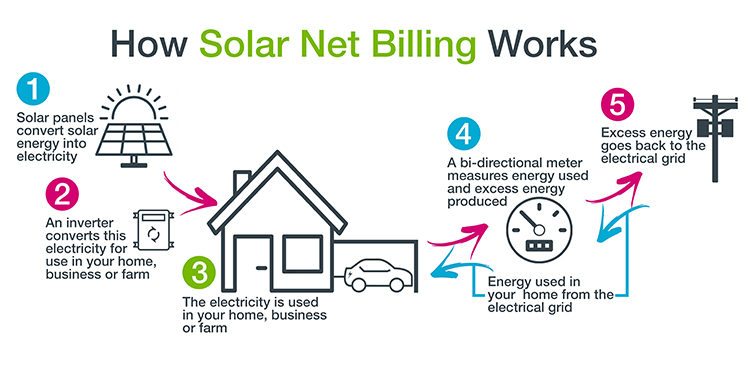
As a small-scale micro-generator, consumers must negotiate compensation and billing with their retailer. The retailer will credit consumers for excess electricity supplied to the grid. The consumer and their electricity retailer will agree to the rate for this credit. Most micro-generators use these credits monthly to offset their electricity bill.
If consumers don't use all of their credits, the retailer must financially compensate consumers for unused credits once a year. The Micro-Generation Regulation describes the way these credits flow between consumers, retailers and the Alberta Electric System Operator (AESO).
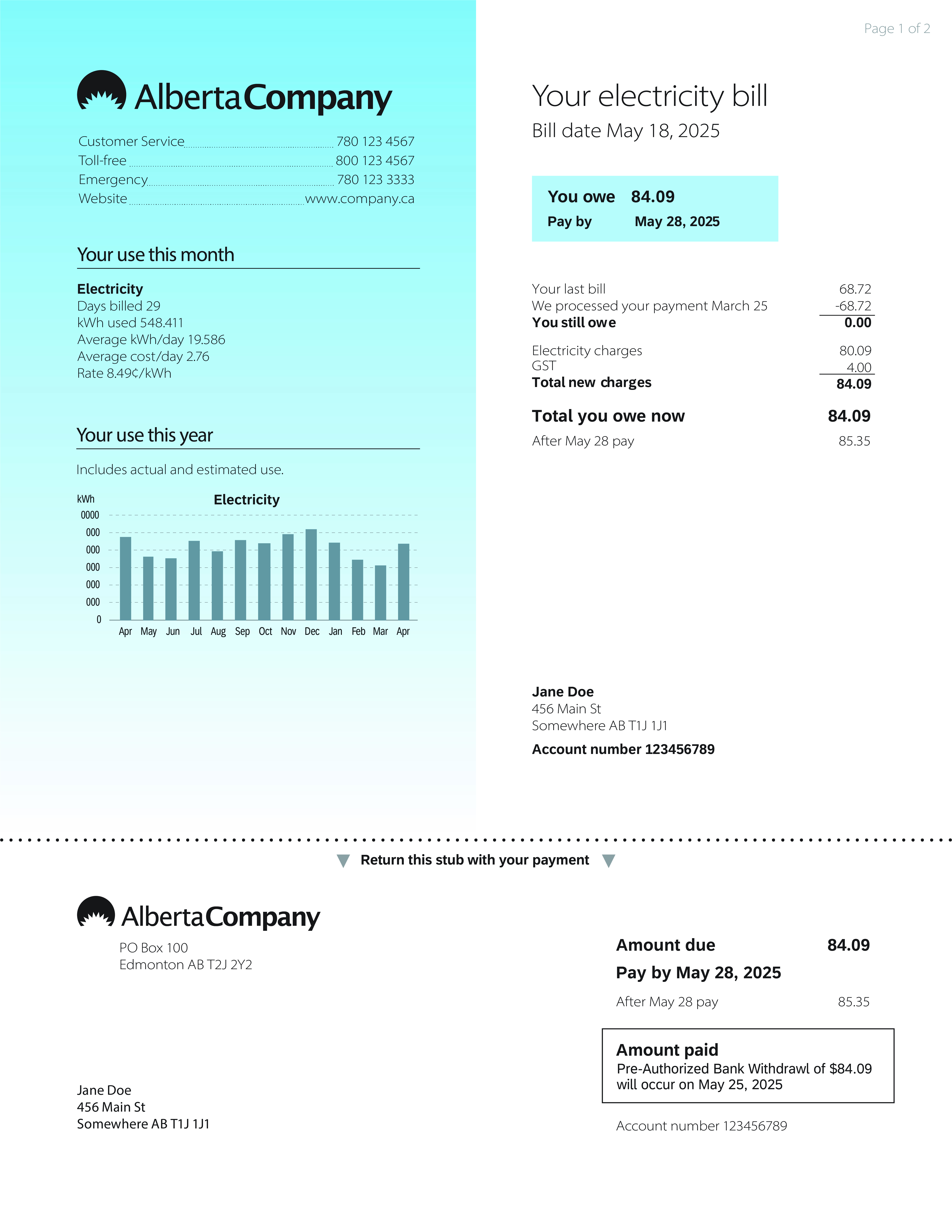
Example of a micro-generation bill
Micro-generation requirements
If consumers wish to become a micro-generator, they can follow the step-by-step guide at Alberta Micro-generation. The Alberta Utility Commission’s Rule 024: Rules Respecting Micro-Generation outlines the forms that must be completed in order for the AUC to approve consumers as a micro-generator.
For more detailed information on the process and rules on micro-generation in Alberta, check out:
- Alberta Utilities Commission (AUC) website
- AUC Micro-generation Notice Submission Guideline
- AUC Rule 024: Rules Respecting Micro-generation
If consumers have questions on micro-generation projects, they can contact their distributor.