
Monitor utility bills on a regular basis, even if automatic withdrawal is enabled, to ensure charges are accurate.
Depending on the plan selected, small businesses might receive two separate utility bills – one for electricity and another one for natural gas, or the bill might be bundled to include both power and gas.
Line items on small business utility bills
Although retailers' bills all look different, they will all contain similar information and line items. According to Section 4 of the Billing Regulation, 2003 (electricity) and Section 4 of the Natural Gas Billing Regulation, electricity and natural gas bills must show all credits or charges as separate line items.
Main charge categories
Two main charges make up utility bills:
- The cost of energy consumed
- The cost of delivering this energy
Energy charges fluctuate based on how much electricity and natural gas was consumed during the billing period, while the cost of delivering the energy is largely fixed.
Delivery charges cover the cost of installing, operating, and maintaining the infrastructure that's used to transmit energy to homes, small businesses, and farms. For electricity, this infrastructure includes poles, wires and transformers. For natural gas, infrastructure includes pipes and compressor stations.
Delivery company rates are regulated by the Alberta Utilities Commission (AUC). The AUC holds rate hearings to ensure that consumers receive safe and reliable services at a reasonable cost.
Depending on the small business’ utility rate class and the distributor, there may be other line items on the utility bill. If demand charges are applicable, they might be displayed as a separate line item or included as part of the delivery charges. These charges are based on the highest amount of power (kilowatt or kilovolt-ampere) needed at a given point in time.
Click on the image to learn about various line items and charges on electricity or natural gas utility bills.
Please click on the image to learn about various line items and charges on your electricity or natural gas utility bills.
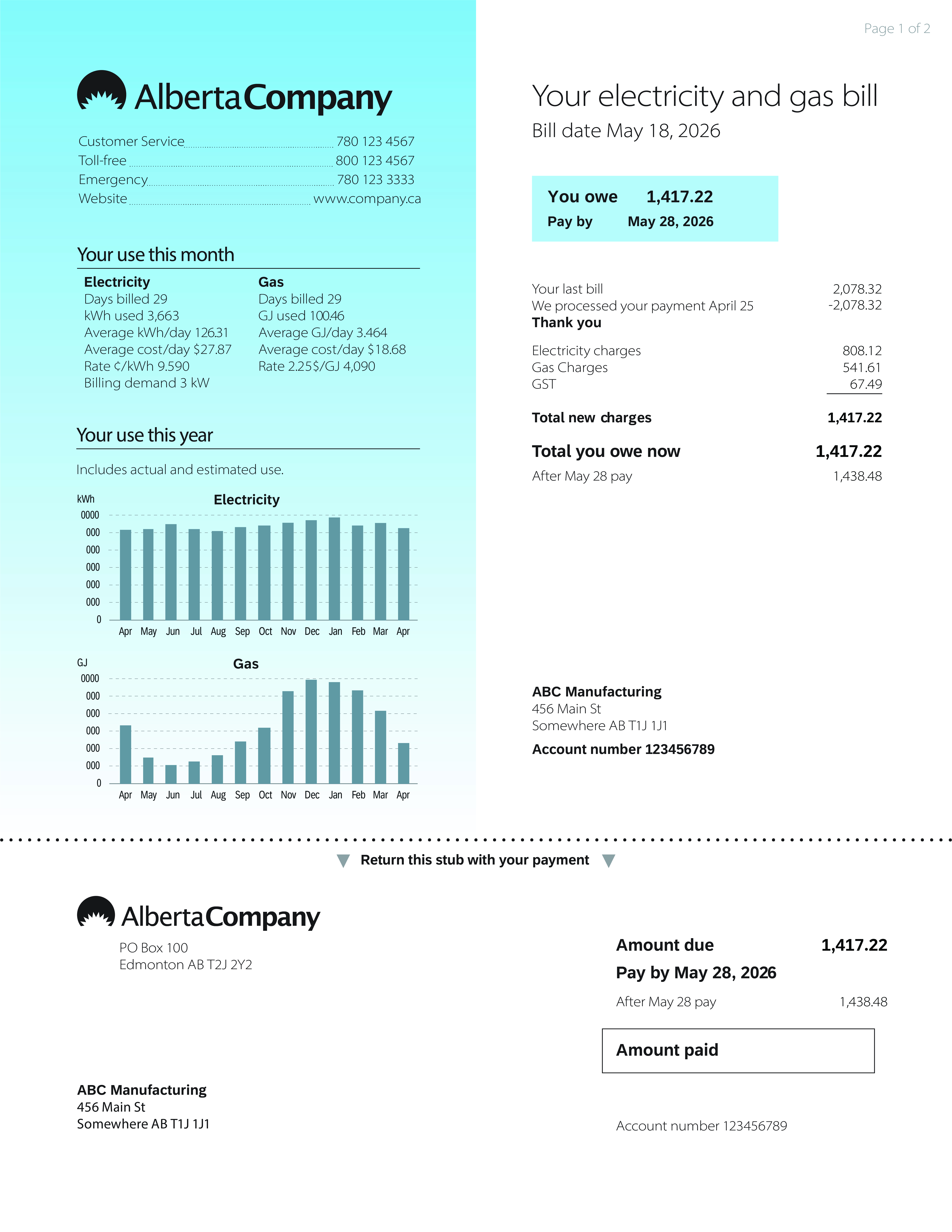
There are two kinds of retailers. Regulated retailers set their rate using a formula approved by the Alberta Utilities Commission. Competitive retailers set their rate independently. You choose the kind of retailer and which company to buy your energy from.
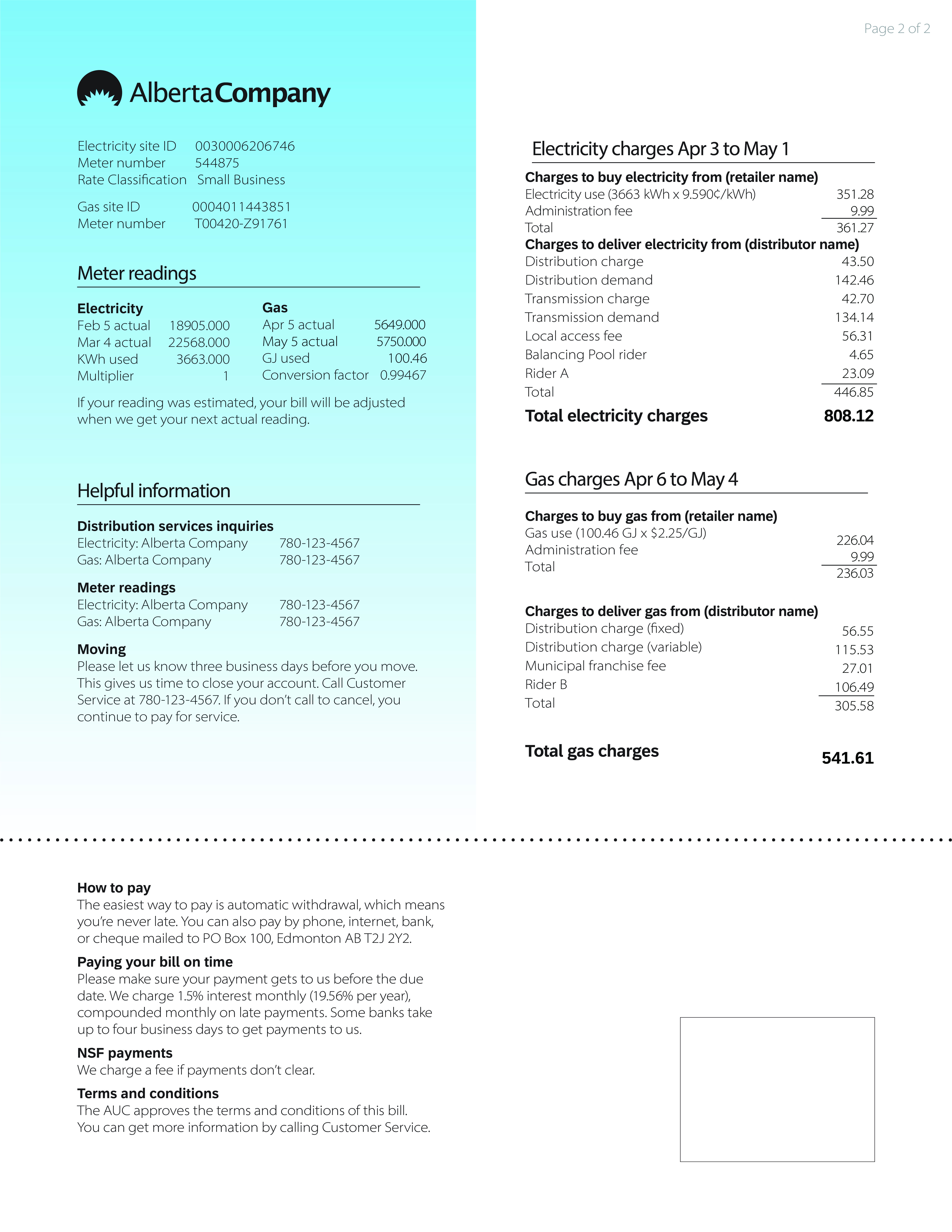
Transmission: Transmitting electricity or moving gas over long distances from the source to your local area.
Distribution: Transmitting electricity or moving gas within your area, usually within your city or town.
Transmission: Transmitting electricity or moving gas over long distances from the source to your local area.
Distribution: Transmitting electricity or moving gas within your area, usually within your city or town.
As business grows
As a small business expands, electricity and natural gas needs may evolve as well.
Retailers may offer customized utility rates for businesses with electricity usage that exceeds 250,000 kWh/year and/or natural gas usage above 2,500 GJ/year.
Business owners should reach out to retailers directly and advocate for electricity and natural gas plans tailored to suit their needs.
Larger businesses can seek clarification on bills, rates, and charges directly with their retailer or distributor.
Contact the Industrial Power Consumers Association of Alberta and the Alberta Direct Connect Consumers Association for information related to large‑capacity energy usage and guidance on large commercial service options.